Supporting animal-related projects
- Animals & Culture Studies – Innovations in Higher Ed
- Animals & Culture Studies Program – Miami-Dade College
- Clients & Affiliations
- Family Spirals®
- Animals & Culture Collective™
- Early Publications
Blending academic and nonprofit expertise to advance projects, campaigns, and research tackling the complexities of our relationships with other animals and ecosystems. I help explore and represent these relationships in compelling ways, to improve ‘human-animal relationships’ at home and across communities, adapting behavior change models to achieve positive outcomes.
|
|
Animals & Culture Studies – Innovations in Higher Ed
Beginning in the early 1980s, I developed the first transdisciplinary programs in Animals and Culture Studies, designed to explore our perceptions of nonhuman animals (real and symbolic, as individuals and as groups) cross-culturally, and the complexities of our relationships with them. This work is inspired by notions of compassion, social justice, environmental ethics, and various human-oriented interdisciplinary studies programs while illuminating the subjectivity and agency of individual animals (as well as the historical resistance to considering and valuing their individuality, sentience, connections, and emotions).
Although transdisciplinary, it’s rooted in cultural anthropology due to the emphasis on culture, community, critical thinking, comparative ethics, and holism. Likewise, intrinsic to the field are the meanings and experiences that have historically been attributed to being human, including human (dis)connections with ‘Nature.’ (Since its introduction, others refer to and redefined the field as ‘animal studies,’ ‘anthrozoology,’ ‘critical animal studies,’ or other variant).
In 2010, Eric began working in an emerging subfield he calls Animal Death Studies / Zoothanatology, to explore notions, practices, and mourning of death and dying for other species as well as humans, cross-culturally. Much of that work has been orchestrated through the Green Pet-Burial Society. He also examines the real and symbolic role of other species within the context of our interspecies families (see Family Spirals® below).
Eric graduated with a B.A. in Animals and Culture Studies from Binghamton University and continued his inquiry through an innovative M.A. program at Vermont College (now housed at The Union Institute and University), followed by advanced study in cultural anthropology at The New School for Social Research.
Animals & Culture Studies Program – Miami-Dade College
In 1990, I created and taught the pioneering Animals & Culture Studies Program at Miami-Dade College for nearly four years, and developed curricula for six core courses:
- Cultural Anthropology – Cross-cultural perceptions of nonhuman animals
- Physical Anthropology – Human animals and constructions of sociobiology
- Ethics – Animals in human ethical systems
- Humanities – Reflecting animals in art, architecture, music, drama, literature and philosophy
- Social Problems – Sexism, racism, speciesism and other oppressions in the US
- International Relations – Socio-political considerations for ecological preservation
Classes were conducted as transdisciplinary seminars in which students would be introduced to key concepts in animals and culture studies. Those enrolled in the program would apply this learning to their coursework in the six core courses. Students could also adapt animal-related themes to coursework in 30 additional courses (in sociology, economics, education, ecology, business and health sciences).
Through the Animals & Culture Studies Program I could reach communities throughout Dade County. I worked with campus galleries on key exhibitions (including one by Sue Coe), coordinated a Humane Education Village with the Miami Book Fair International, met with the publisher of The Miami Herald to review my evaluation of the Herald’s coverage of animal-related issues, and served as co-chair of the Friends of the Dade County Animal Shelter.
Clients & Affiliations
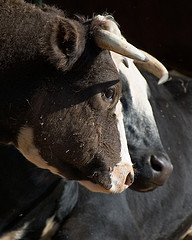
Former clients include the Animals & Society Institute (ASI), for whom I provided strategic planning, fund development, and communications support. I facilitated their advisory council, and was a member of their Human-Animal Studies Executive Committee. I provided critical support in establishing the multidisciplinary peer-reviewed journal, Society & Animals, and served on its editorial board. I also conceived of ASI’s undergraduate journal, Sloth. In Los Angeles, I was also involved in bringing animal-themed exhibitions to online and brick-and-mortar galleries.
While living in Miami, FL, I served as co-Chair and Director of Humane Education for the Friends of the Dade County Animal Shelter (also defunct). In the aftermath of Hurricane Andrew, I co-coordinated veterinarians, animal protection organizations, army personnel, The Red Cross, volunteers, supplies and marketing in animal relief efforts. With the Miami Book Fair International, I organized a humane education village with various artistic, participatory and cross-cultural educational activities.
Visit Organizations to review other organizations served.
Family Spirals®

I founded Family Spirals®, a capacity-building not-for-profit focusing on the role that family plays in our personal and public lives, and addressing family problems and relationships often overlooked by other providers, researchers, and funders. It’s dedicated to family wellbeing through public engagement, program development, online resources, research, the arts, and capacity-building support to providers and communities. It is also being developed as a global think tank to address how local and global problems impact families.
Families shape our personal experiences, identities, and reactions, and are key conductors of cultural learning, biases, and values. Family Spirals® addresses some of the most stigmatized, marginalized and complicated issues within families through its four programmatic centers:
- Center for Families & Animals™ – improving our relationships with animals and one another, inside and outside the home. We explore family violence holistically, including the linkages among pet, child, elder, spousal, and sibling abuse. We also explore family interactions with wildlife and other animals through work, school, recreational clubs, on the road, and elsewhere.
- Center on Sibling Dynamics™ – exploring sibling aggression, conflicts, and friendships. Sibling aggression (‘sibling rivalry’) is an often tolerated form of bullying.
- Center for the Adult Child™ – healing transgressions between children and parents. We’re launching with a program addressing in-law conflicts.
- Center on Cyberfamilies™ – Privacy, connectedness, and disruptions in a digital age. Addressing ways that technology may strengthen or weaken family bonds.
The Center for Families & Animals also hosts the Green Pet-Burial Society (GPBS). Founded in early 2010, GPBS takes a multilevel approach and addresses practical applications in promoting green burial options for a beloved pet’s remains, including whole-family eco-cemeteries where animal remains may be buried in the family plot. The creation of conservation pet and whole-family cemeteries is also a mechanism by which to establish and maintain wildlife preserves. Such programs play a unique role in bridging humane and environmental communities. GPBS is a pioneering force in the emerging subfield of Animal Death Studies (in 2010 he coined the term Zoothanatology).
Animals & Culture Collective™
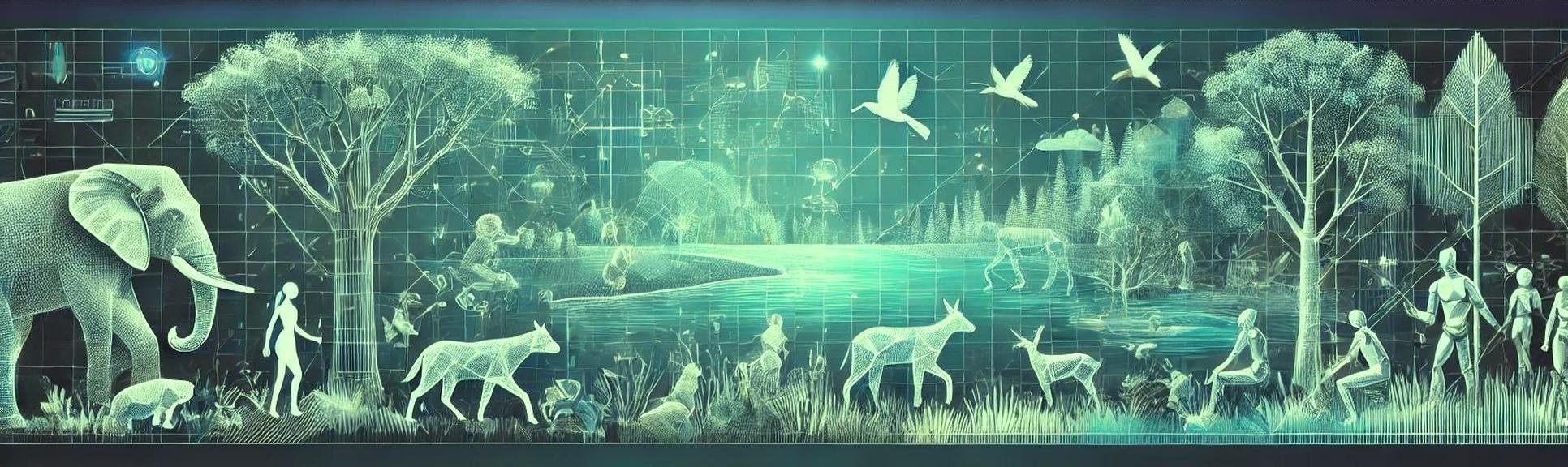
In this digital age, people around the world are creating vibrant digital projects that explore our relationships with animals, and support their wellbeing—these projects inspire, educate, and contribute meaningfully to the public discourse about animals.
Unlike physical objects, digital projects can disappear within a few years—sometimes permanently—yet cost far less to preserve. Independent projects without institutional backing are particularly vulnerable. As technology evolves, or if a creator loses funding, shifts focus, or passes away, their project may be gone from public view and forgotten. Additionally, company-owned platforms that currently host digital content may lose users, or can be sold, shut down, or co-opted. In the last few years, we’ve already seen a number of nonprofits, cultural institutions, and iconic businesses go bankrupt or close, and we’ve seen digital platforms sold and politicized.
In 2025 I launched the Animals & Culture Collective™ to preserve and share vital digital projects—websites, archives, art, exhibitions, galleries, blogs, podcasts, short films, and music—by providing ongoing updates and ensuring long-term accessibility for scholars, artists, students, and the public. These multi- and transdisciplinary projects are an increasingly important part of our heritage and can remain relevant for years to come, illustrating diverse cultural perspectives and approaches, as well as the connections that bring us together. This collective is a communal response whereby we can look out for one another. Additionally, we always work in alignment with each creator’s intentions, instructions, and consent.
Early Publications
Greene, Eric. 2003. Honoring Memory: Animals, the Holocaust and Social Marketing in PsYETA News, 23:2-3. (a much edited version of original article)
Greene, Eric S. 1995. Ethnocategories, Social Intercourse, Fear and Redemption: Comment on Laurent’s ‘Definition of the Category Mushi … ‘ in Society and Animals, 3 (1): 79-88.
Greene, Eric S. 1993. Gender, Politics and Spiritual Transformation: Comment On Lawrence’s ‘The Symbolic Role of Animals … ‘” in Society and Animals, 1 (1): 39-44.
photo credits: Lion by Kjunstorm, Animal Kingdom Sign by pixeljones, Poplar Spring Animal Sanctuary by sneakerdog, Animal Pelts by avlxyz
updated November 17, 2025
 EverGreene Consulting